
1. Introduction
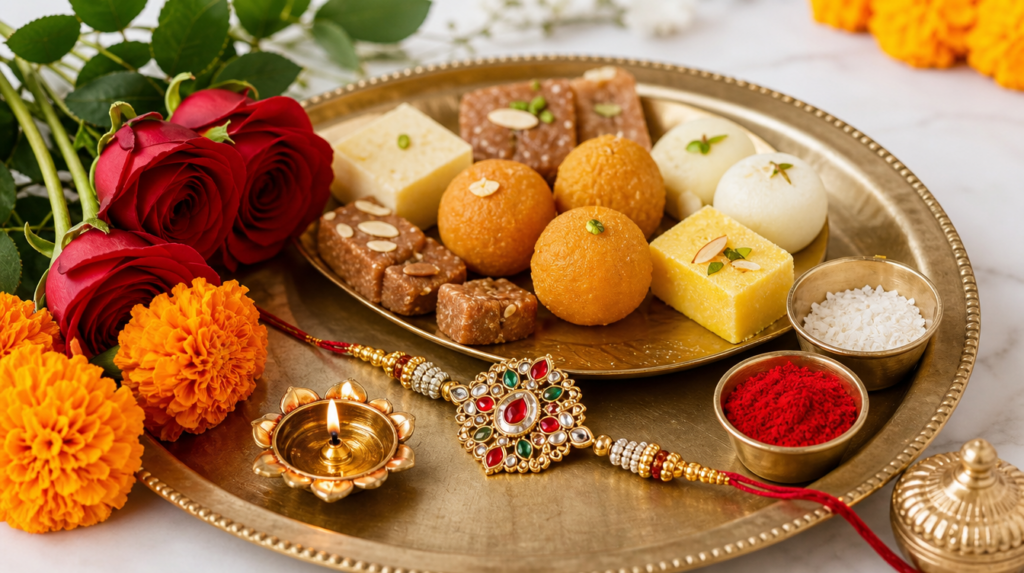
Every year, a thin thread turns into one of India’s most emotional festivals. Raksha Bandhan is a Hindu festival that celebrates the relationship between brothers and sisters, marked by tying a sacred thread called a rakhi. It falls on the full moon day (Purnima) of the Hindu month of Shravan, which typically falls in August. Behind the simple act of tying a thread lies a much bigger idea a lifelong promise of care and protection between siblings.
2. What is Raksha Bandhan
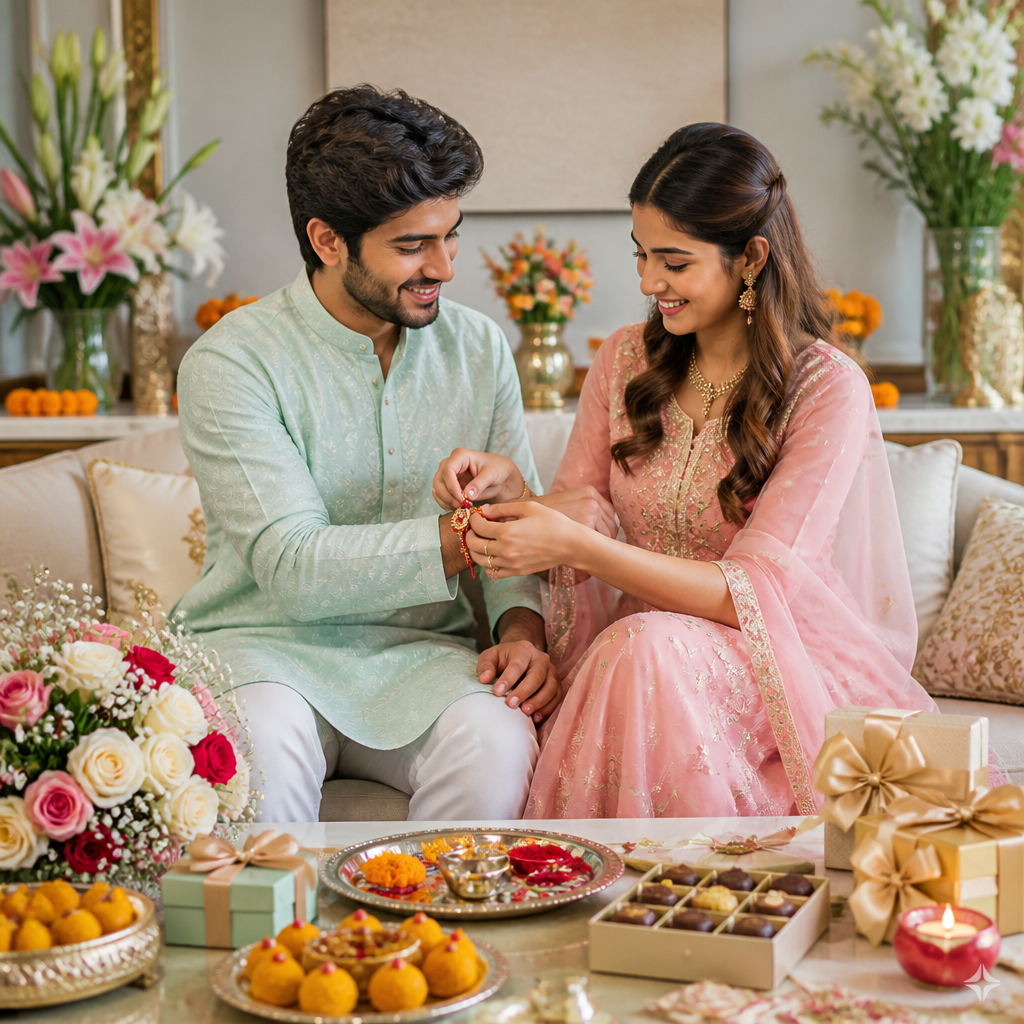
At its core, Raksha Bandhan involves a sister tying a rakhi around her brother’s wrist. In exchange, the brother makes a promise to protect and support her through life, often sealed with a gift.
The name itself explains the sentiment. “Raksha” means protection, and “Bandhan” means bond or tie. Put together, the festival literally translates to “the bond of protection.” This isn’t limited to physical safety it also represents emotional support, respect, and the assurance that the sibling will always be there.
The festival falls under the broader category of Hindu festivals tied to the lunar calendar, which is why the date shifts each year on the Gregorian calendar despite always landing on Shravan Purnima.
Sub-points worth including:
- The rakhi is traditionally a thread, though modern versions include beads, charms, silk threads, or designer bracelets.
- The festival isn’t restricted to a specific region it’s celebrated across most of India and Nepal, with local variations in rituals.
- In some parts of India, the festival is also known by other names for instance, it coincides with Nariyal Purnima (Coconut Day) in coastal Maharashtra and Gujarat, where fishing communities offer coconuts to the sea.
- The right wrist is traditionally used for tying the rakhi, as it’s considered the more active and dominant hand in most rituals, though this can vary by family custom.
- While the classic version involves a sister and brother, many households now include a reverse gesture brothers gifting their sisters something meaningful even without a rakhi being tied, especially in single-sibling or all-sibling-of-one-gender families.
- The thread is meant to be worn for a period of time after being tied, not removed immediately in many households, people wear it for days or weeks as a visible reminder of the promise made.
3. The Ritual Step by Step
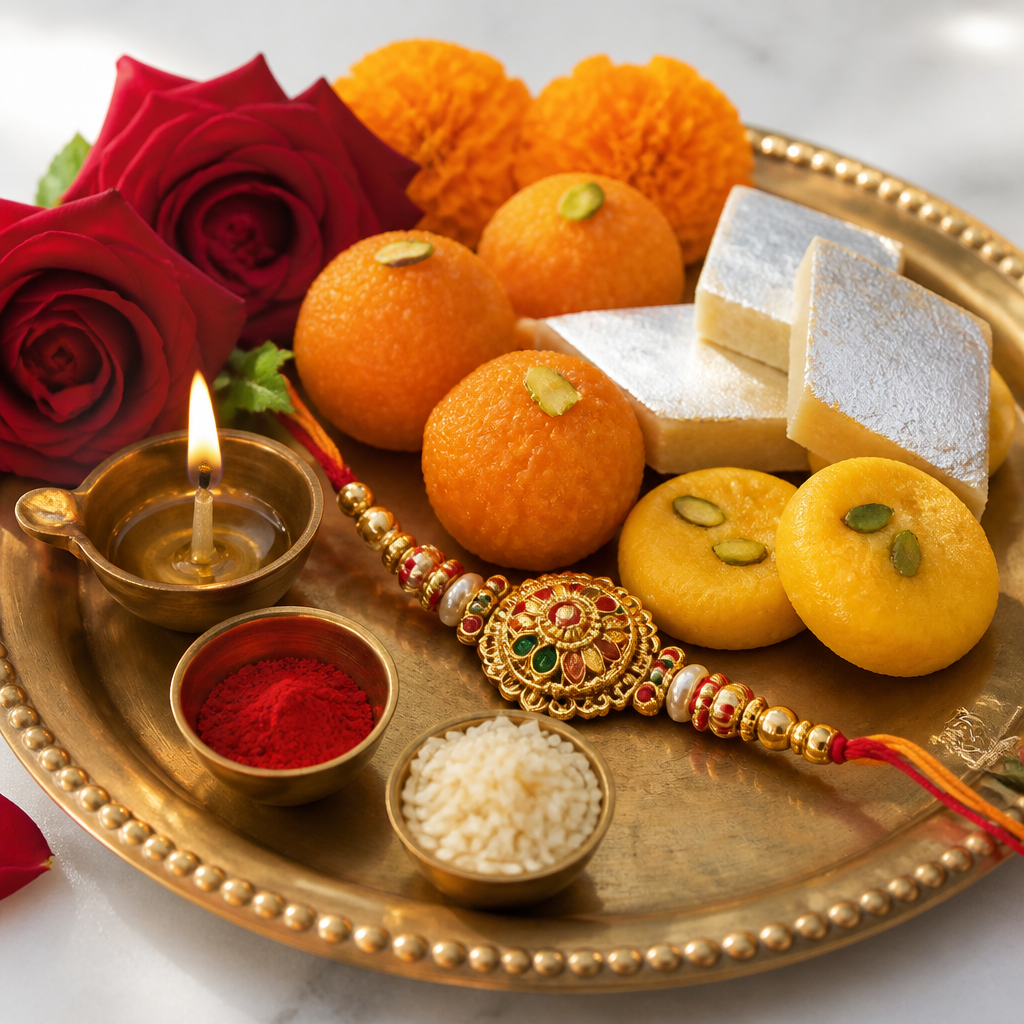
The Raksha Bandhan ceremony follows a fairly consistent structure across households, though small variations exist by region and family tradition.
- Puja thali setup: A decorative plate (thali) is prepared with the rakhi, a diya (lamp), roli or kumkum (for the tilak), rice grains, and sweets.
- Aarti and tilak: The sister performs a small aarti (waving the lit diya in front of her brother) and applies a tilak on his forehead a mark symbolizing good fortune and protection.
- Tying the rakhi: The sister ties the rakhi on her brother’s right wrist while reciting prayers or well-wishes.
- Sweets exchange: Sweets are fed to each other, symbolizing the sweetness of the relationship.
- Gift-giving: The brother reciprocates with a gift traditionally money, but increasingly personalized presents, flowers, or hampers.
This sequence is more than ceremony each step reinforces a different part of the sibling bond, from respect (tilak) to affection (sweets) to commitment (the rakhi itself).
4. Why We Celebrate Meaning Behind It
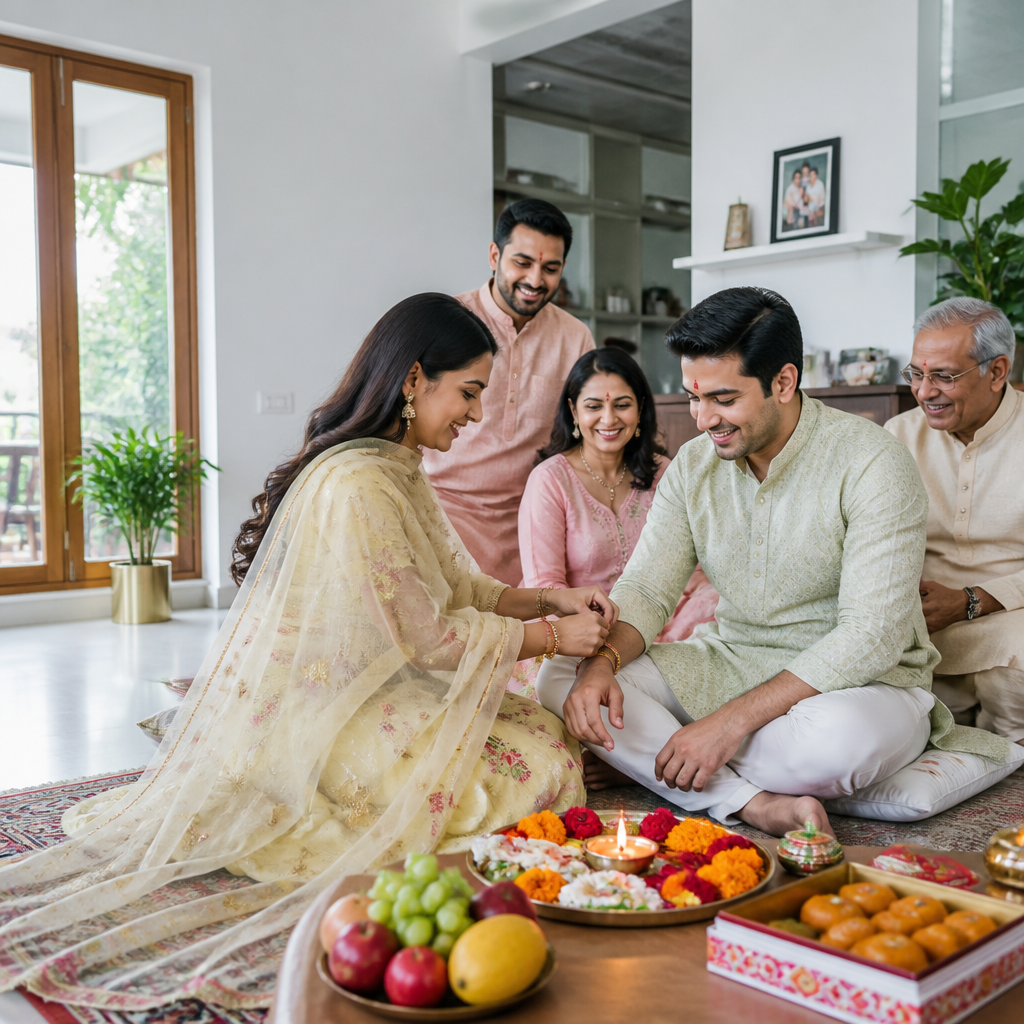
The rakhi thread is symbolic rather than literal. It doesn’t physically protect anyone instead, it represents an emotional commitment between siblings to look out for each other.
Key ideas behind the celebration:
- Sibling duty and lifelong support: The brother’s promise isn’t a one-day gesture it’s meant to reflect an ongoing responsibility toward his sister’s wellbeing.
- Family reunions: Because the festival often brings siblings back together, especially those living apart for work or marriage, it doubles as an occasion for family bonding beyond just the ritual itself.
- Reaffirmation over time: For many families, tying the rakhi each year is less about a new promise and more about reaffirming a relationship that already exists.
5. Mythological Origins
There’s no single confirmed origin story for Raksha Bandhan instead, several legends are commonly associated with it. These should be treated as traditional stories passed down through generations, not verified historical events.
- Krishna and Draupadi: One popular story from the Mahabharata describes Draupadi tying a piece of cloth around Krishna’s wrist to stop him from bleeding after he was injured. Krishna is said to have later protected her in return, most famously during the disrobing incident in the Kaurava court.
- Indra and Indrani: In another mythological account, Indra’s wife, Indrani, ties a sacred thread on his wrist before his battle against the demon king Bali, which is said to have helped him emerge victorious.
- Regional and historical legends: Some stories connect the tradition to queens sending rakhis to kings of other kingdoms as a request for protection the most commonly cited being a queen’s appeal to Emperor Humayun. I’d flag that the historical accuracy of these accounts is debated among historians, so it’s worth treating this as folklore rather than settled fact if precision matters for your content.
6. Beyond Blood Siblings
While Raksha Bandhan traditionally centers on biological brothers and sisters, its scope has widened considerably over time.
- Cousins and extended family: It’s common for cousins to exchange rakhis, especially in joint family setups.
- Friends as “rakhi siblings”: Close friends who share a sibling-like bond often tie rakhis to each other, regardless of gender.
- Symbolic ties: In some communities, rakhis are tied to trees, or given to soldiers and public servants as a gesture of respect and protection, showing how flexible the tradition has become.
This inclusivity is part of why the festival has stayed relevant the sentiment of protection and care matters more than strict family lineage.
7. Raksha Bandhan in Modern Times
Today, Raksha Bandhan is celebrated in many different ways. Siblings may choose personalized gifts, flowers, chocolates, sweets, dry-fruit hampers or online gifts based on their preferences.
For families living away from each other, online Rakhi and gift delivery has made it easier to participate in the celebration and send a thoughtful surprise from a distance.
This shift reflects a broader trend the festival has adapted to modern conveniences without losing its emotional core. A few points worth noting:
- Distance is no longer a barrier: For families living in different cities or countries, online rakhi and gift delivery services have made it easier to participate in the celebration, even when siblings can’t be together in person.
- Personalization over tradition: Gifting has shifted from generic presents to choices that reflect the recipient’s actual taste a favorite flower arrangement, a specific chocolate brand, or a curated hamper.
- Same-day and advance planning options: Many people now book deliveries in advance or rely on same-day services to make sure their rakhi and gift arrive on time, regardless of their own travel plans or work schedules.
- Digital touches: Some siblings supplement the physical rakhi with video calls or digital greetings when an in-person celebration isn’t possible, blending old ritual with new tools.
Before You Celebrate
Raksha Bandhan is more than a festival of tying a Rakhi. It is a meaningful celebration of the love, trust, care and lifelong connection shared between siblings. From traditional rituals and exchanging sweets to sending flowers, chocolates and thoughtful gifts, the celebration has evolved while keeping its emotional significance intact. Whether brothers and sisters celebrate together or from different cities, Raksha Bandhan offers a special opportunity to express appreciation and strengthen the bond they share.
Frequently Asked Questions
1.What is Raksha Bandhan?
Raksha Bandhan is a traditional Indian festival that celebrates the special bond between brothers and sisters. Sisters traditionally tie a Rakhi around their brothers’ wrists as a symbol of love and protection.
2.Why do we celebrate Raksha Bandhan?
Raksha Bandhan is celebrated to honor the bond between siblings and express love, care, support and appreciation for one another.
3.What does Rakhi symbolize?
A Rakhi traditionally symbolizes the bond of love and protection between siblings. Today, it is also associated with mutual care, affection and emotional support.
4.How is Raksha Bandhan celebrated?
The celebration commonly includes tying a Rakhi, performing a Tilak and Aarti, exchanging sweets and gifts, and spending time with family.
5.What gifts can I send for Raksha Bandhan?
Popular Raksha Bandhan gifts include flowers, chocolates, sweets, dry fruits, personalized gifts, gift hampers and cakes. The best choice depends on the sibling’s personality and preferences.

Hi, I’m Yash, and I’m passionate about helping people create meaningful connections through thoughtful gifting. As the Marketing Manager at BloomsFlora Flowers & Gifts LLC, I focus on making every gifting experience easy, joyful, and memorable. With a love for digital marketing and all things floral, I enjoy sharing fresh ideas, practical tips, and inspiration to help you choose the perfect gift for every occasion through my blogs. When I’m not crafting new strategies or writing, you’ll find me at the gym, recharging and staying ready for the next challenge! Let’s make every gift a reason to smile.